Winter relocations in the nation’s capital are unlike cold-weather moves anywhere else. Washington DC blends sudden Atlantic moisture, narrow 19th-century rowhouse architecture, and strict parking enforcement into a perfect storm for appliance damage. A refrigerator loaded at 7 a.m. on icy Pennsylvania Avenue faces very different risks than one moved in Chicago or Denver. If your goal is to protect appliances during a winter move in Washington DC, you need to account for freeze-thaw cycles, road salt exposure, and the city’s notorious snow emergency routes that can trigger abrupt towing. This is where seasoned professional moving helpers Washington DC has become essential, especially when navigating foggy alleys behind Adams Morgan brownstones or snow-covered loading areas near Dupont Circle. In 2025, smart winter moving begins with acknowledging that DC’s infrastructure was not built for modern appliances or modern weather extremes.
The 2025 reality of DC winters and how it impacts household appliances
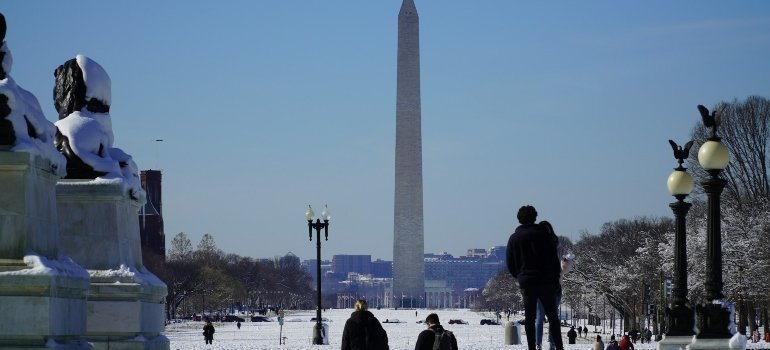
Washington DC winters now fluctuate wildly thanks to climate pattern shifts predicted through 2025 and beyond. One day you’re dealing with 9°C rain, the next morning a flash freeze locks residual water inside appliance hoses and internal lines. These conditions make it even more essential to protect appliances during a winter move in Washington DC, especially when transporting high-risk items like dishwashers, tankless water heaters, and smart refrigerators with sensitive sensors. Capitol Hill and Foggy Bottom residents commonly report condensation buildup inside appliances during winter moves, caused by rapid temperature drops. If you’re renovating or resettling outside the District after the move, coordinated long distance movers Washington DC ensure your appliances remain shielded even during extended cold transit to suburban Maryland or Northern Virginia.
Pre-move appliance preparation specific to DC climate conditions
Before a single dolly touches your floor, preparation needs to match DC’s microclimate realities. Appliances must be defrosted 24 to 48 hours ahead of the move to prevent internal ice formation. In neighborhoods like Petworth or Takoma, where humidity remains higher even in winter, residual moisture can refreeze inside condenser coils or pump systems. To truly protect appliances during a winter move in Washington DC, washing machines and dishwashers should have every hose drained and secured with absorbent padding, while ovens must be sealed to prevent moisture ingress during transport. Residents living in pre-war apartment buildings particularly benefit from DC apartment movers who understand how to time disconnections around shared boiler schedules and limited service elevator windows during snow conditions.
Strategic packing for temperature fluctuations and salt exposure
Packing in Washington DC requires far more than stretch wrap and cardboard. Winter roads are aggressively treated with magnesium chloride and rock salt, and these particles can infiltrate appliance vents, rust metal housing, and corrode electronic panels. To protect appliances during a winter move in Washington DC, movers must wrap units with insulated moving blankets combined with moisture-resistant barrier layers. Anti-corrosion film is particularly useful for high-end stainless steel models commonly found in newer developments like Navy Yard and NoMa. Professional operations like A2B Moving and Storage demonstrate best practice by custom-padding refrigeration units and using weather-sealed dollies specifically designed to withstand icy slope traction near Rock Creek Park and Georgetown’s cobblestone streets.
One critical checklist for safeguarding appliances in a DC winter move
Below is the only checklist you need to truly protect appliances during a winter move in Washington DC without overlooking DC-specific hazards:
- Schedule appliance disconnection during mid-morning to avoid overnight freezing residue
- Use insulated wraps that block salted moisture penetration
- Drain all water systems completely and leave doors slightly ajar before sealing
- Secure internal components with vibration-reducing padding
- Avoid loading during active snow emergencies on designated DC routes
- Allow appliances to acclimate indoors for 6–8 hours before power reconnection
- Verify nearby power grid stability to prevent voltage shock on restart
This approach also supports smoother transition after arrival, making you feel at home in Washington DC after a move.
Navigating winter transit routes and building restrictions
Winter appliance transport in DC is not only about cold, but about movement law complexity. During snow events, designated Snow Emergency Routes such as Georgia Avenue or 16th Street NW carry instant parking restrictions, creating delays that expose appliances to harsher temperatures while trucks reroute. If your relocation involves taking appliances out of the city, especially toward areas like Loudoun County, understanding the challenges of relocating from Washington DC to Sterling becomes vital in sustaining transit protection strategies. In these instances, reinforcing efforts to protect appliances during a winter move in Washington DC involves extended insulation, transport-phase humidity control, and scheduled rest periods during long highway stretches to prevent mechanical stress from prolonged cold compression.
Post-arrival care and temperature stabilization
Once appliances arrive, patience matters. Even if your move is complete, sudden activation after cold exposure can crack internal seals or short control boards. Leaving appliances unplugged for 6 to 12 hours allows thermal equalization—an essential final step to protect appliances during a winter move in Washington DC effectively. In historic neighborhoods like Bloomingdale or Shaw, where indoor heating varies by building vintage, this acclimation phase also compensates for uneven ambient room temperature. This final precaution closes the loop on the five-stage winter appliance protection approach that ensures longevity, functionality, and peace of mind throughout even the harshest DC winter transition.

Now you know how to protect appliances during a winter move in Washington DC!
To protect appliances during a winter move in Washington DC is to recognize the unique intersection of weather volatility, urban logistics, and infrastructure age that defines the region. Whether you’re facing sleet along Embassy Row or navigating snow-slick coal chutes in Logan Circle, adaptation makes the difference. With intentional preparation, strategic packing, and knowledgeable relocation support, your appliances not only survive the season but arrive ready to serve for years despite the challenges that 2025 DC winters present.